Blog
How did CLI change their process for validating breakwater armor units using a 3D digital twin?
For years, validating the compliance of breakwater armor layers made of Accropode™ I, II, or Core-Loc™ units demanded the full-time presence of an on-site diver inspector. However, CLI (Concrete Layer Innovations), a global leader in designing single-layer concrete armor units for coastal protection, decided to revolutionize its process by adopting a novel approach based on a 3D digital twin. This transformation is redefining inspection standards in coastal engineering.
CLI and the compliance certificate: a global commitment to compliance
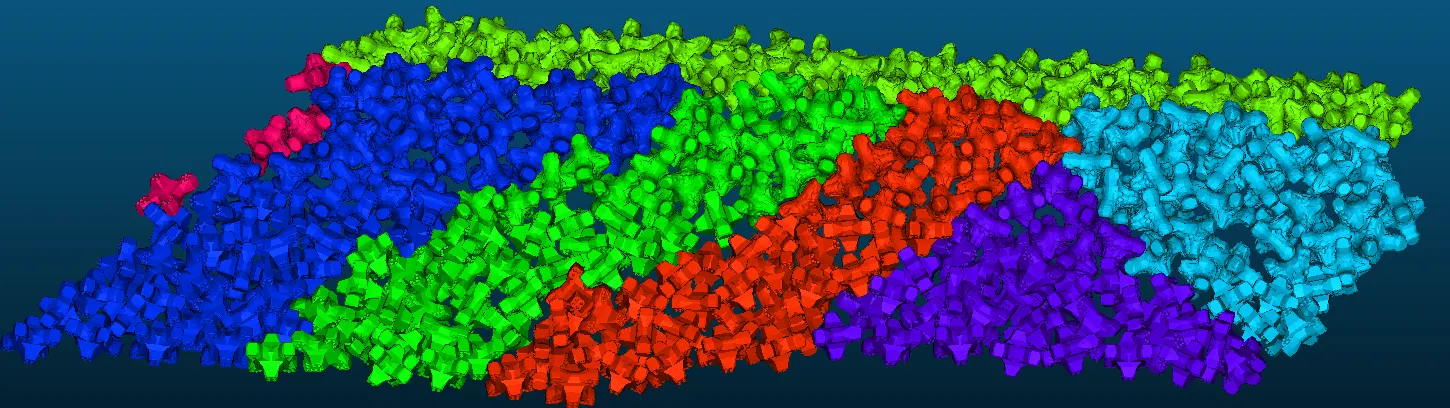
Concrete Layer Innovations (CLI), a leading company in maritime breakwater protection technologies, utilizes artificial concrete armor units. CLI operates on construction sites globally and holds licenses for Accropode™ I & II, Ecopode™, Accroberm™ I & II, and Core-Loc.
CLI offers an additional Compliance Certificate service for specific projects upon contractor or project owner request. This certificate certifies that the unit placement adheres to the principles outlined in the Technical Information Document (T.I.D.). It is crucial for project owners, engineers, and insurers, as it verifies compliance, durability, and defect-free installation upon project completion.
Until recently, obtaining this certificate involved a complex, costly, and imperfect inspection process.
The old method: divers, time and limitations
Before 2020, project validation primarily relied on inspections conducted by accredited professional divers. These divers visually assessed the condition of the armor layer, documented any anomalies, and compiled a report. However, this method lacked a structured, unit-by-unit analysis and objective data that could be remotely accessed.
Beyond the financial implications for the company, which could exceed €500k for multi-year projects, this approach faced significant technical challenges. Water turbidity frequently limited visibility, rendering reports subjective. Moreover, CLI had to depend solely on analyses conducted by the diver on-site, whose reliability hinged on the operator's level of training and occasional video footage when visibility permitted.
Consequently, the certificate was based solely on limited visual observations, lacking precise traceability and the capability to monitor changes over time.
A new process, data that speaks for itself
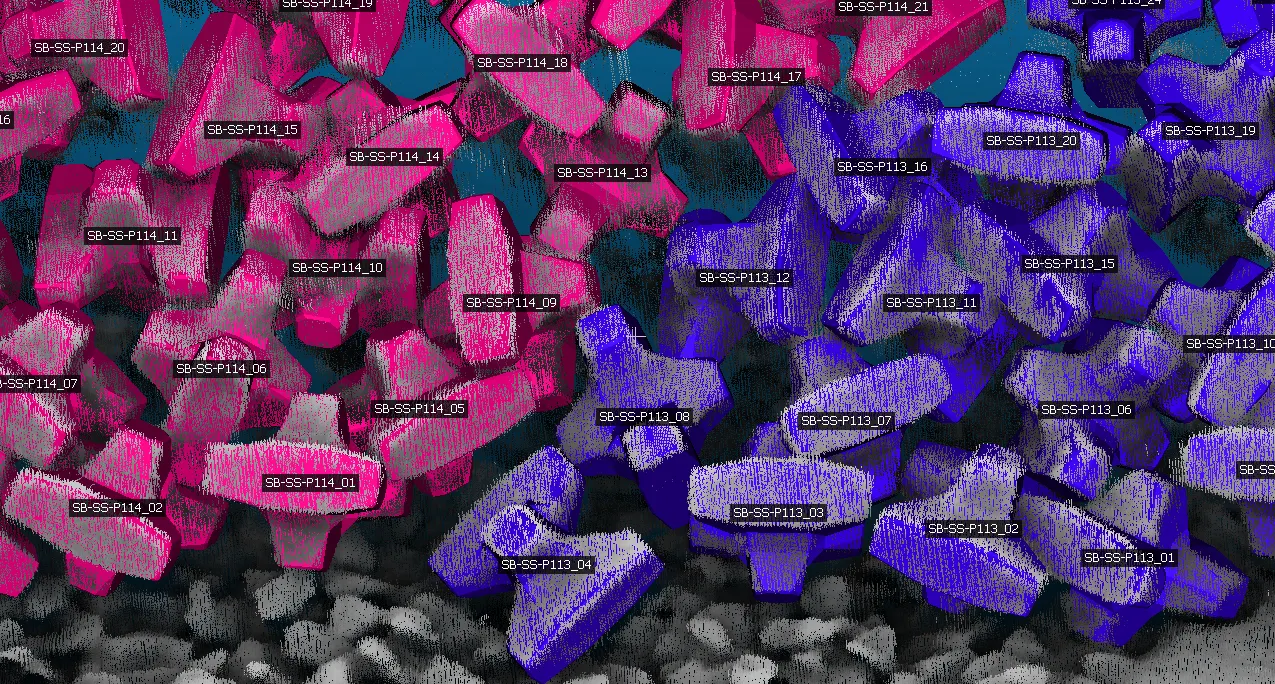
As early as 2020, CLI incorporated 3D digital model technology, such as SEABIM, into its Compliance Certificate issuance process. High-resolution multibeam bathymetric surveys replaced diver inspections for submerged sections, while drone-based photogrammetry or LiDAR is employed for above-water areas.
For the company, surveys can be outsourced to a competent local firm if conducted on a one-time basis. Alternatively, they can be brought in-house if the necessary equipment and trained teams are already available, or if daily monitoring is required. It's important to note that an internal bathymetric survey department typically oversees various other project workstreams, such as dredging, underlayer, toe protection, port works, and dumping. When an internal bathymetric survey service is already deployed for other construction workstreams, the cost of 3D digitization (under €150k) is significantly lower compared to having a full-time expert diver on site (over €500k).
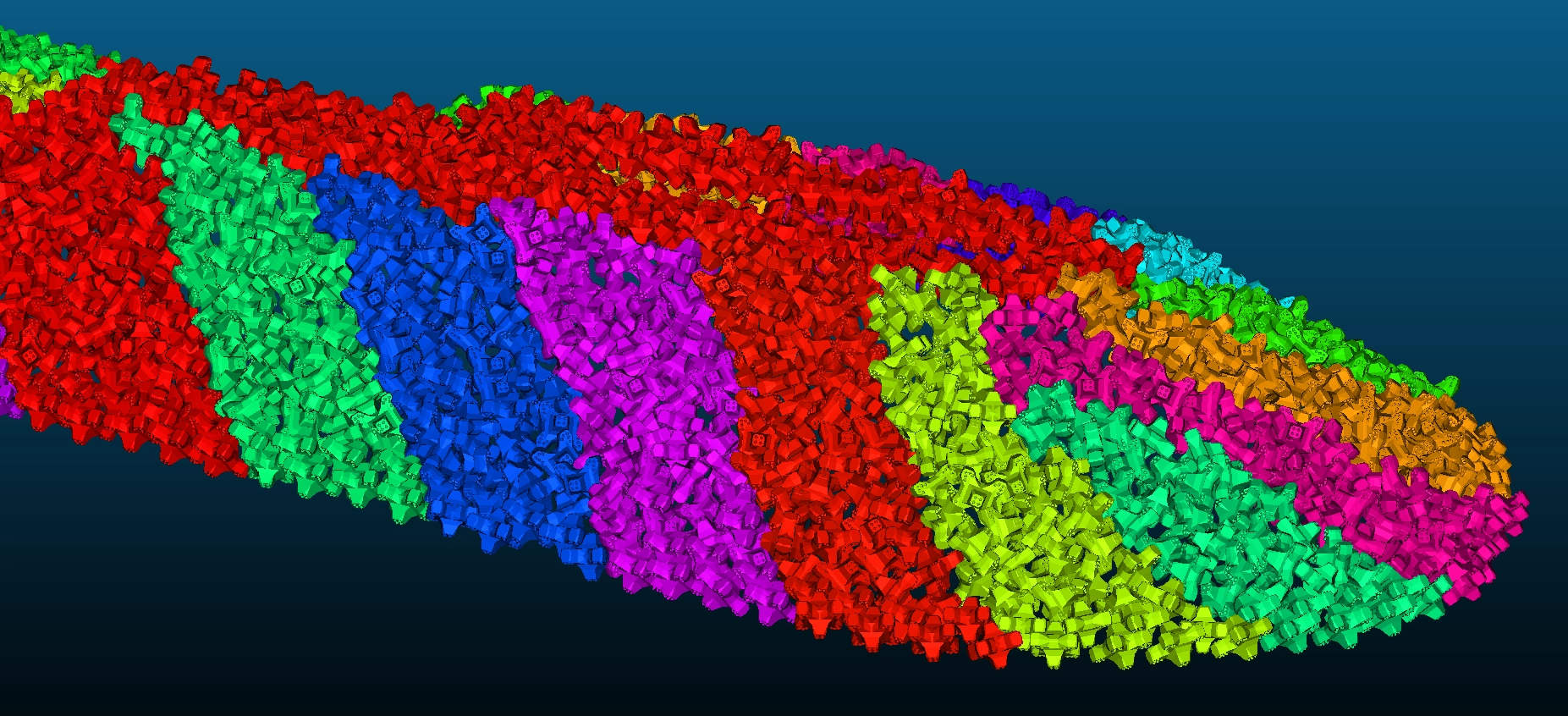
This data allows CLI to automatically detect block shapes within point clouds, creating a complete 3D digital twin of the armor layer. CLI's experts then analyze the placement quality block by block on the digital model, directly from the office. This enables them to issue compliance reports section by section and ultimately deliver the final Compliance Certificate based on factual and objective data.
Before / after: what has changed concretely for CLI
| Before 3D digital twin | With 3D digital twin |
|---|---|
| Certified divers required | Multi-beam bathymetric survey |
| Visibility reduced by turbidity | Unaffected by water turbidity |
| ~€1,000 to €1,500/day — >€500k for multi-year projects | Complete 3D digital twin — <€150k |
| No block-by-block analysis | Automated block-by-block analysis |
| No time-based traceability | Progressive monitoring over time |
| On-site analysis by diver only | Remote analysis from CLI expert offices |
| Subjective and poorly detailed reports | Objective and traceable reports |
A method scaled globally
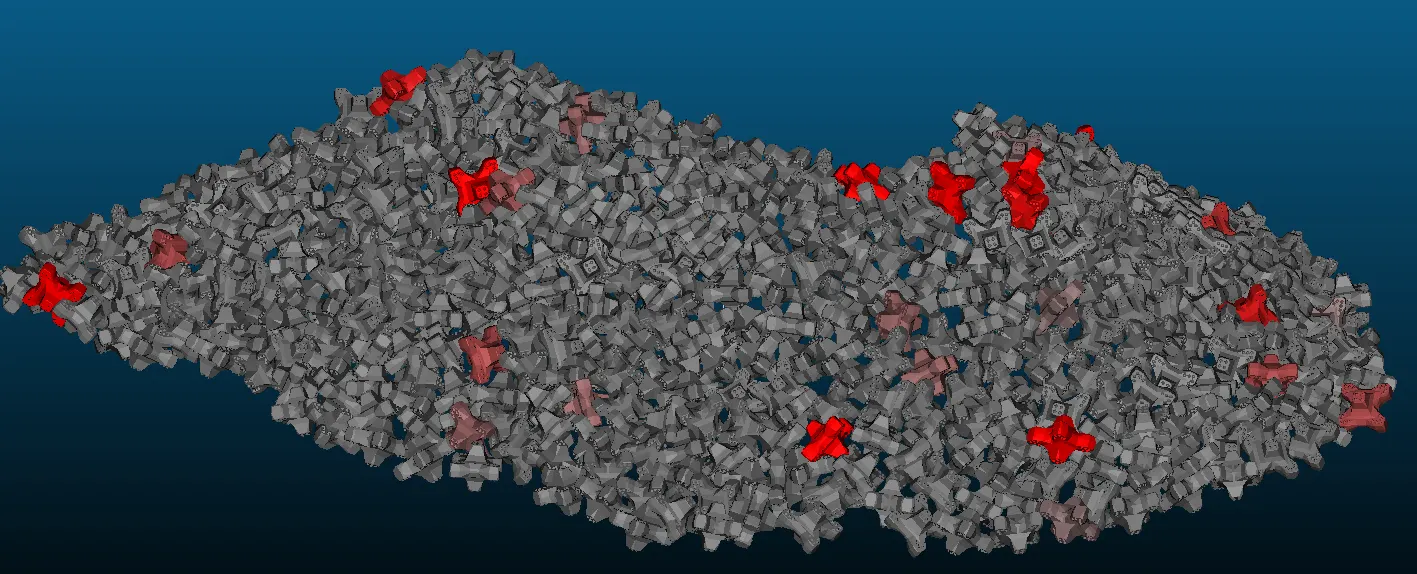
CLI has extended this approach to all its projects. Teams in France and Dubai now process data directly from their offices, irrespective of the construction site's location. Additionally, CLI can engage SEABIM as an external provider for on-site bathymetric surveys, technical audits, or company training on these subjects.
This organization enables CLI to maintain a consistent level of rigor across a diverse range of projects, spanning various geographical and climatic conditions.
Concrete benefits: robustness, savings, reliability
Eliminating the systematic use of divers not only results in significant cost savings for each project, but also enhances data quality and analytical rigor. This enables the issuance of a Compliance Certificate based on factual evidence rather than relying solely on human observation in challenging conditions.
CLI now possesses complete traceability, section by section, throughout the construction works. Each compliance report meticulously documents the actual state of the placement, allowing for necessary corrections before the breakwater is completed. This proactive approach effectively minimizes costly rework at the project's conclusion.
Conclusion
The compliance certificate case illustrates how 3D digital twin technology is revolutionizing the validation of single-layer armor on rubble mound breakwaters. By combining high-resolution field surveys with AI algorithms for automated block detection, SEABIM enables a shift from a craft-based inspection approach to an industrial, precise, and reproducible methodology. This transformation is subtle yet crucial for companies constructing rubble mound breakwaters, regardless of their location.
More articles
April 2026
How can 3D digital twins improve monitoring of breakwaters?
Breakwaters protect ports and coastal areas from swells and flooding, but monitoring them remains a major technical challenge. With climate change and more frequent extreme weather events, monitoring breakwaters has become critical. New solutions are emerging, notably 3D digital twins.
July 2026
From Post-Processing to Real Time: Our New Step for Breakwater Placement Control
Since 2019, SEABIM has been digitising breakwater armour units in 3D through post-processing. Discover how real-time digitisation is now transforming placement control on maritime construction sites.