Blog
From Post-Processing to Real Time: Our New Step for Breakwater Placement Control
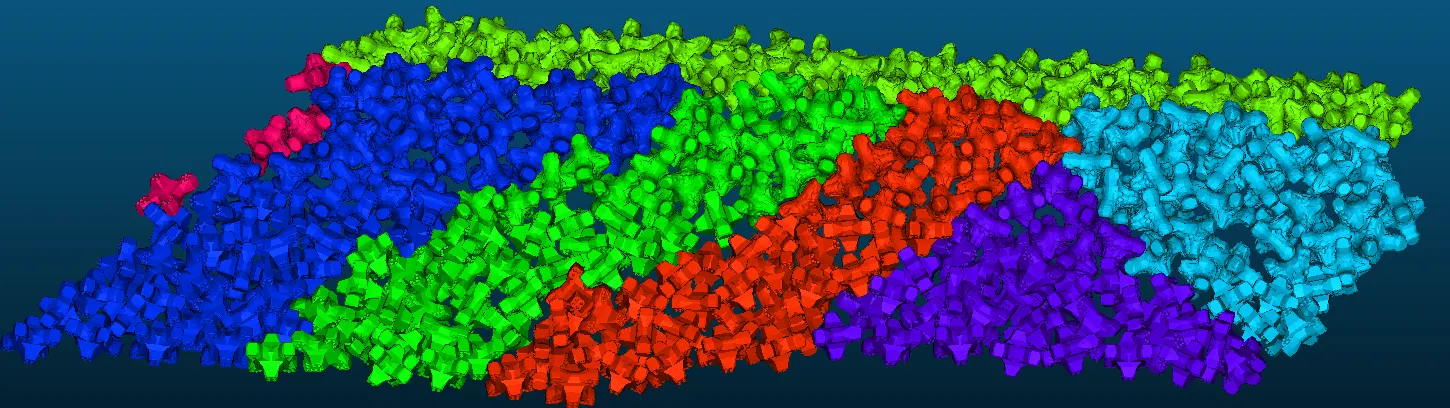
Since 2019, SEABIM has been digitising breakwater armour units in 3D through post-processing. This method remains solid and still relevant today: it automatically detects the shape and position of each block, and verifies compliance with interlocking rules (density, diamond mesh pattern, contacts, out-of-profile blocks, orientation).
However, it has one fundamental limitation: it happens after placement. And in maritime works, "after" can be very costly.
The real cost of non-conformity detected too late
In instances where a block is poorly placed and this is only detected after the fact, rectifying the issue can be challenging. If the block is on a lower row of the armour layer, the blocks on the rows above must be removed to access it. This process is time-consuming, requires a significant amount of labour, and is logistically complex. It directly impacts the project schedule.
For projects that underwent external validation, the observed rework rate ranges from 6% to 15%. This is a range that can represent significant sums, depending on the size of the project, as well as weeks of delay on an already tight schedule.
The conclusion is clear: early detection leads to reduced costs.
Real time as a performance lever
Building on this observation, SEABIM has developed a real-time digitisation solution with a clear goal: giving the operator a reliable block position at the very moment of placement – not days or weeks later.
Specifically, the system combines an above-water LiDAR with an underwater scanning sonar, with a high refresh rate. The block's position is updated continuously, with latency under 50 milliseconds, and placement filters are calculated every second. It is possible to perform a rescan after unhooking the sling in order to confirm that the block has not moved once it has been released. Please be advised that data is also stored for post-processing monitoring purposes, including settlement and weather effects.
All processes can be viewed in real-time via the SEABIM Placement Companion interface, accessible from the crane and the supervision cabin, as well as an online platform available to all project stakeholders.
What this changes on-site in practice
Real-time feedback allows the operator to adjust the block's position prior to releasing the sling. Any deviation is corrected immediately, eliminating the need for rework, dismantling of upper rows, or schedule impacts.
The advantages are clear:
- —The process has been designed to reduce rework rates by ensuring that any deviations are identified at the point of placement. This approach prevents the majority of non-conformities that lead to costly dismantling.
- —Projects delivered on time: fewer on-site surprises, fewer schedule slippages.
- —The system allows full traceability, with each placed block recorded with its 3D position. This facilitates project handover and long-term monitoring.
A first real-world application: the M24 NRL project
This solution was first implemented under real conditions on the M24 project of the Nouvelle Route du Littoral, in La Possession (Réunion Island). The contract encompassed a 100-metre extension of the breakwater, utilising 4 m³ Xblocs, executed by the RAZEL-BEC / PICO consortium. A key contractual stipulation was the requirement for real-time 3D placement monitoring.
The project's unique instrumented spreader beam design allowed to obtain a real-time 3D model. Post-processed photogrammetry was also carried-out regularly to update the model, providing both immediate and deferred control.
The initial field experience has been favourable. It has been found that better placement control and better progress tracking have been achieved. Most importantly, the ability to act on deviations before they turn into costly rework has been demonstrated.
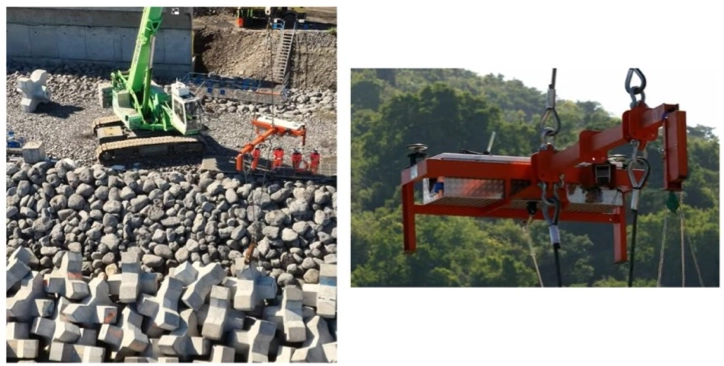
Instrumented spreader beam for block placement and control designed for the M24 project by ID OCEAN
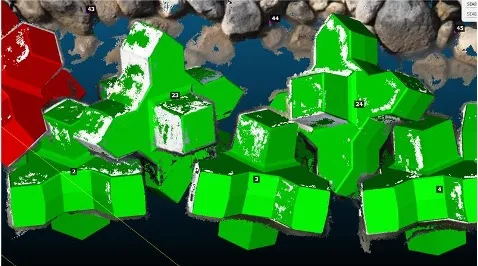
Real-time 3D overlay with post-processing photogrammetry
More articles
May 2026
How did CLI change their process for validating breakwater armor units using a 3D digital twin?
For years, validating the compliance of breakwater armor layers demanded the full-time presence of an on-site diver inspector. CLI (Concrete Layer Innovations) revolutionized this process by adopting a 3D digital twin approach — cutting costs and redefining inspection standards.
April 2026
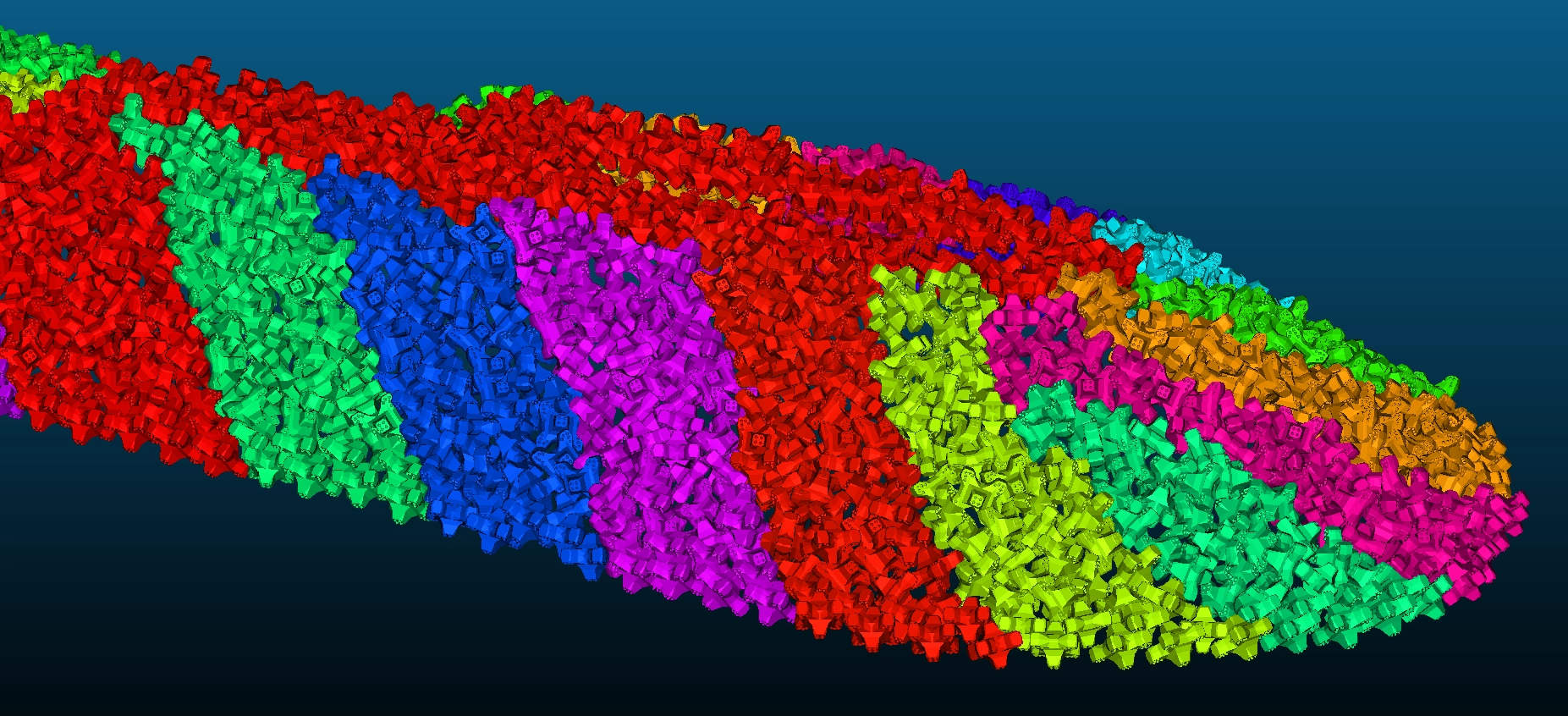
How can 3D digital twins improve monitoring of breakwaters?
Breakwaters protect ports and coastal areas from swells and flooding, but monitoring them remains a major technical challenge. With climate change and more frequent extreme weather events, monitoring breakwaters has become critical. New solutions are emerging, notably 3D digital twins.